Farm Tomita
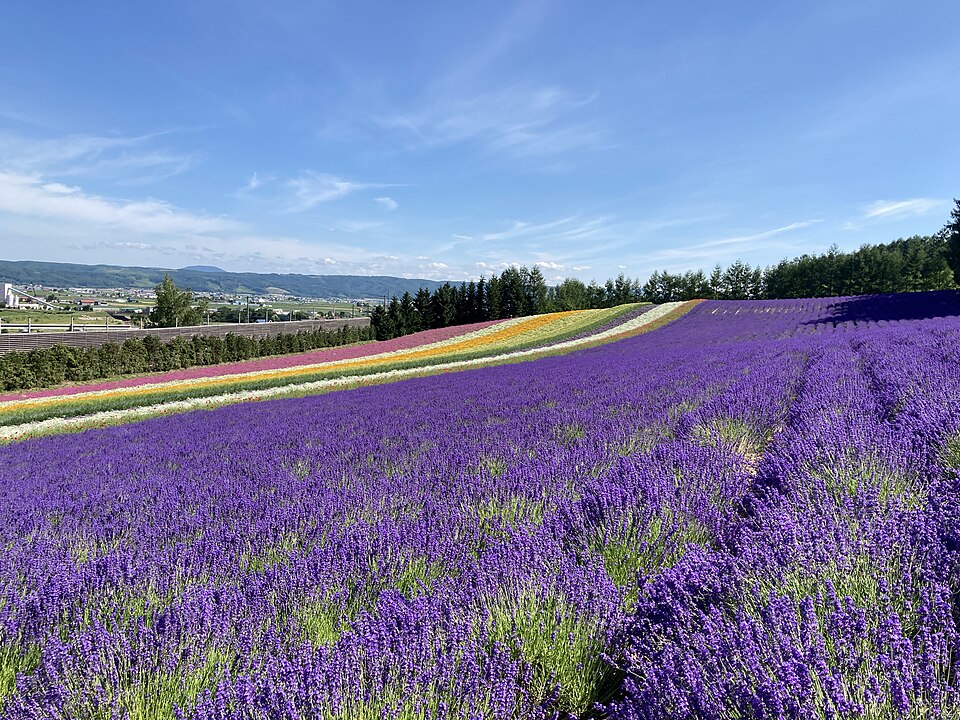
A strong summer choice for lavender, multicolored flower fields and mountain views. Aim provisionally for early-to-mid July; main-farm late-blooming lavandin offers a separate early-August possibility. [S1][S3][S4][S5]
Photos

2021-07-17 · RJD · CC BY 3.0
File:Farm-Tomita.Irodori-no-Hatake01.JPG · Local photo


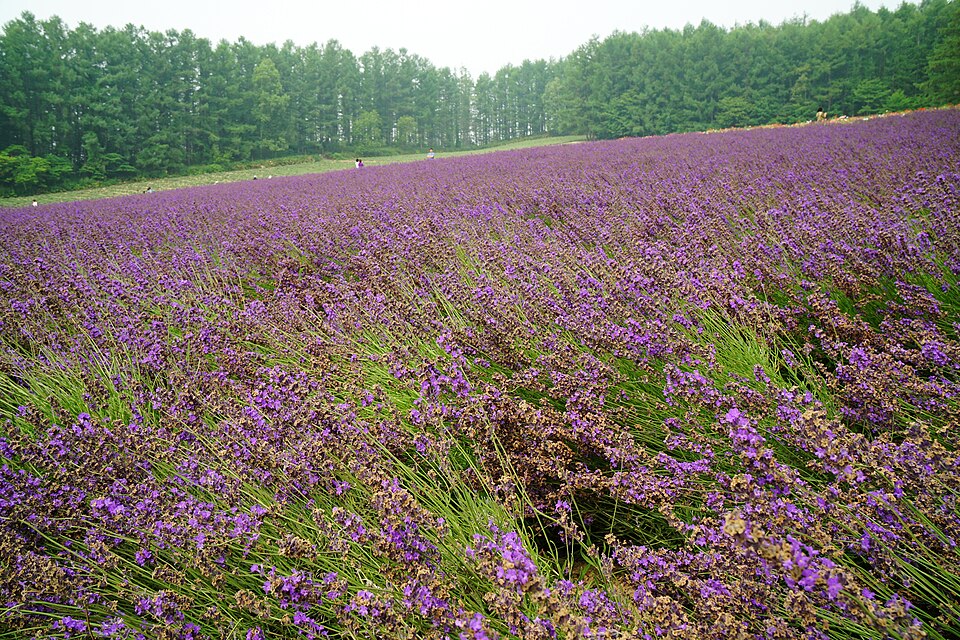
2014-07-26 · 663highland · CC BY 2.5
File:140726 Farm Tomita Nakafurano Hokkaido Japan03bs.jpg · Local photo

Location map
Farm Tomita main farm; general venue marker
Use the map links below if the interactive map is unavailable.
43.34193, 142.391785Farm Tomita main farm; general venue marker
43.41944, 142.42778
Where to eat
Farm Tomita main farm, Nakafurano · Cafe
Café René at Farm Tomita
A bright, temperature-controlled seated café for a straightforward lunch or lavender-flavoured drink without leaving the farm.
Order: At lunch, choose seasonal Hokkaido vegetable-and-sausage curry or Furano potato gratin; iced lavender tea or lavender coffee suits a later pause.
Indoor café seating is confirmed; most substantial food is lunch-only, with drinks continuing afterward.
Hours: Mid-June-August 09:00-16:30; lunch 10:30-14:30; final orders 16:00. Seasonal hours can change.
Booking: Farm Tomita does not accept café-seat reservations.
On site · On site, inside Farm Tomita's main farm
The simplest seated lunch and lavender-drink break; arrive before 14:30 for the main food menu.
Kitamachi, Nakafurano · Brewery taproom
NAKAFURANO BREWERY — Taproom THE DAY
A genuine local brewery taproom serving its own draught beer with small regional snacks.
Order: Try Nostalgia, the lemon-and-lavender ale, with local cheese or smoked sausage; venison jerky is another listed accompaniment.
On-site draught beer is confirmed; choose an announced afternoon opening rather than assuming daily hours or guaranteed seating.
Hours: Seasonal schedule posted by the operator on Instagram and Google Maps.
Nearby · About 15-25 min walk from the main-farm entrance
The strongest local draught-beer lead after the flowers, provided its posted calendar actually offers an afternoon opening.
Southern Nakafurano, Route 237 near Gakuden · Cafe
Taberasaru Furano — café at Domaine Raison
The winery's current visitor café offers local-food lunches, goat-milk desserts and indoor or terrace seating.
Order: Before 14:00, choose beef stew, seasonal vegetable curry or potato gratin; afterward, choose goat-milk cheesecake or goat-milk soft-serve.
Seated summer café service is verified through 17:00, but ordinary by-the-glass wine service is not.
Hours: May-October 10:00-17:00; lunch 11:00-14:00; café menu 14:00-16:30 last order. Closure dates are posted on Google Maps.
Booking: Special Dutch-oven lunches require advance booking; ordinary summer café visits are listed separately.
En route · About 10-15 min drive, south toward Furano
An easy winery-café food or dessert stop on the return journey; treat wine tasting separately from a glass-wine bar.
Why go
Time to allow
1.5-2.5 hours for several fields, photographs and refreshments; longer for extensive photography. Excludes driving and parking queues.
Drive from Furano Station
15-20 min
Route options & directionsWhen to arrive
Timing and Weather Recommendations
Late June
Early lavender varieties normally begin coloring; this is not reliably full purple coverage. Traditional Lavender Field lists flowering from late June, while Irodori's published season begins in July. [S1][S3][S4]
July
The operator gives early-to-mid July as the usual lavender peak, followed by progressive harvesting. Irodori's best viewing is listed as mid-to-late July, so the farm's different displays do not peak simultaneously. [S1][S4]
Early August
Do not expect the classic lavender slopes at July intensity. Harvest normally finishes around early-to-mid August. However, the main farm's Lavandin Field lists best viewing in late July-early August and flowering into mid-August. [S1][S5]
Recommendation: prioritize early-to-mid July for lavender, with a flexible mid-July visit for overlapping flower displays. [S1][S4]
Weather alternatives
In showers, shorten the field walk and use Hanabito House's history and scent displays; for persistent rain, reschedule the outdoor visit. Carry a light rain layer, protect against sun and buy drinks onsite during hot weather. [S2][S7][S8]
A practical visit sequence
- Park in the designated passenger-car area and orient yourself at Hanabito House. [S1][S2]
- Visit Traditional Lavender Field first; optionally walk uphill for valley and mountain views. [S3]
- Continue to Irodori Field for contrasting flower bands; in early August, prioritize checking Lavandin Field instead. [S4][S5]
- Finish with lavender soft-serve and Hanabito House's lavender-history and scent displays. [S2][S9]
Opening hours & practicalities
- Hours and season
- The operator's seasonal schedule, year unspecified, lists 08:30-17:30 from late June through mid-August, subject to change. The FAQ directs visitors to this schedule and prohibits after-hours entry. [S1][S2]
- Costs
- The currently published FAQ, dated June 19, 2025, states admission and parking are free. Lavender soft-serve is listed at JPY 450 cone or JPY 400 cup, year unspecified. [S1][S9]
- Parking and access
- Approximately 500 passenger-car and 30 bus spaces, plus several accessible spaces. Approach using Farm Tomita signs from Route 237. Do not park on public roads or in bus-only spaces. Parking is limited to business hours. [S1][S6][S7]
- Facilities and accessibility
- Hanabito House has toilets, an accessible toilet, shops and summer cafe facilities. Limited wheelchairs, strollers and walking sticks are loaned free, first-come. Traditional Field involves a slope; complete step-free access and upper-floor lift provision were not verified. [S1][S2][S3]
- Reservations
- Visits during opening hours require no reservation, including groups. Cafe seating and mobility-equipment loans cannot be reserved. [S1]
Make the most of the visit
- Use your long stay flexibly: check the operator's flower diary before selecting the day. [S1]
- Treat weekday opening-time arrival as crowd avoidance, not a guarantee; leave the following appointment flexible. [S7]
- Take the optional Traditional Field uphill walk when mountain visibility is good. [S3]
- Buy refreshments onsite rather than planning a picnic: outside food and beverages are prohibited. [S8]
- Keep Lavender East separate in navigation and expectations: it is approximately 4 km away. Its published 2026 opening was June 20-July 20, 09:30-16:30, not the main farm's season or a 2027 commitment. [S6][S10]
When to skip
Safety & considerate travel
- Stay on designated paths: entering planted rows can damage plants and transfer soil pathogens. Do not pick flowers or fruit. [S8]
- Drones, tripods, commercial photography and blocking narrow paths are prohibited. [S8]
- Pets and overnight vehicle stays are prohibited. Japanese rules specify a smoke-free farm. Adjacent Tomita Melon House is unaffiliated; its purchases and rubbish must not be brought into the farm. [S8]
Possible pairings
- Hinode Park
- Furano Marche
Before you go
- Confirm summer hours, entry rules, admission and parking charges.
- Check field-specific bloom photographs and harvest progress shortly before visiting.
- Check cafe openings and mobility-equipment availability.
- If adding Lavender East, verify its separate 2027 dates.
Additional notes
- Lavender-season traffic can be heavy. [S7]
- Hours conflict: the tourism listing gives 18:00 closing in July-August, whereas the operator lists 17:30 for late June-mid-August. Use the operator and recheck. [S2][S11]
- Smoking conflict: the English visitor notice mentions designated smoking areas, but the Japanese notice and FAQ specify a smoke-free farm. Follow the Japanese prohibition unless current onsite instructions clarify otherwise. [S1][S8][S12]
Public sources
- S1 — Frequently asked questions
https://www.farm-tomita.co.jp/news/detail.asp?id=52 - S2 — Hanabito House
https://www.farm-tomita.co.jp/farm/facility_guide.asp?id=1 - S3 — Traditional Lavender Field
https://www.farm-tomita.co.jp/en/farm/flower_guide.asp?id=4 - S4 — Irodori Field
https://www.farm-tomita.co.jp/en/farm/flower_guide.asp?id=3 - S5 — Lavandin Field
https://www.farm-tomita.co.jp/en/farm/flower_guide.asp?id=15 - S6 — Accesses to Farm Tomita and Lavender East
https://www.farm-tomita.co.jp/en/access/ - S7 — Furano FAQ
https://www.furanotourism.com/en/static/faq.php - S8 — Requests to visitors
https://www.farm-tomita.co.jp/news/detail.asp?id=85 - S9 — Soft-serve ice cream
https://www.farm-tomita.co.jp/en/cafe/foodmenu.asp?cat=1 - S10 — About Lavender East in 2026
https://www.farm-tomita.co.jp/en/news/detail.asp?id=371 - S11 — Farm Tomita
https://www.furanotourism.com/en/spot/spot_D.php?id=350 - S12 — Request from Farm Tomita
https://www.farm-tomita.co.jp/en/news/detail.asp?id=316